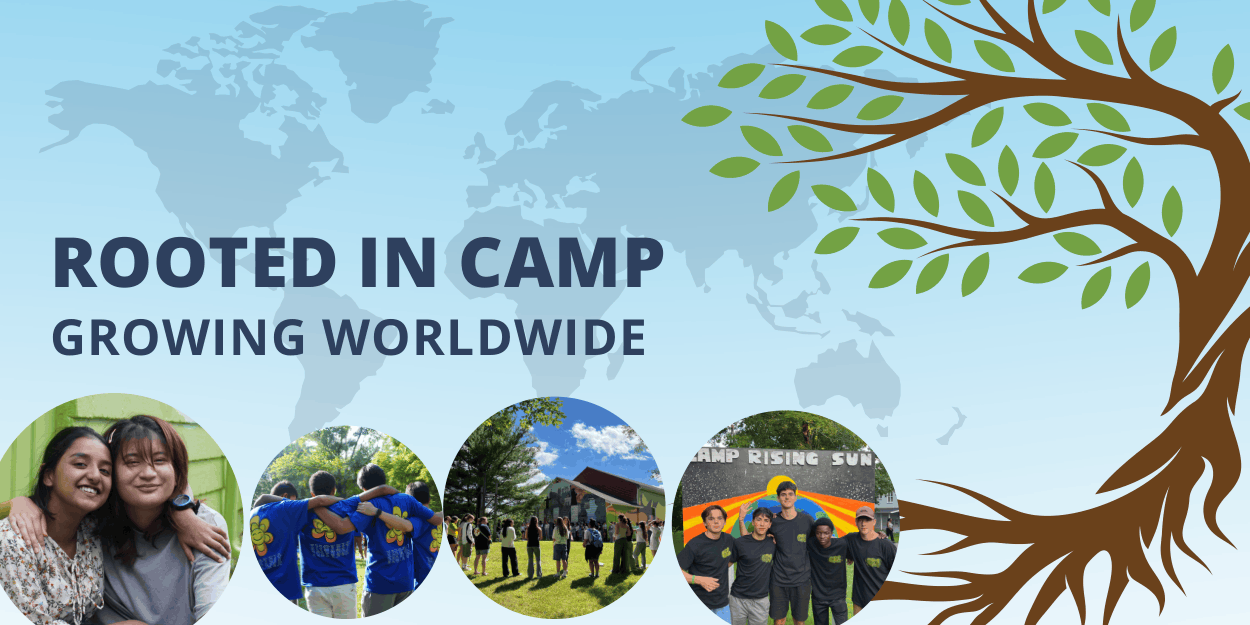
Branching Out: How CRS Alumni Shape the World
The impact of Camp Rising Sun (CRS) and The Ethical Leadership Experience (TELE) extends far beyond a single summer. Each year, young people arrive at our programs and begin a journey that continues across their lives—carrying forward values of leadership, service, and cross-cultural understanding. From this shared experience, alumni branch out into the world, shaping their communities in ways both big and small, all connected by what first took root at Camp.
The following alumni stories offer a closer look at what happens after Camp—how ideas take shape, paths unfold, and lives continue to grow from a shared beginning.
Support the next generation of campers as they begin their own journey!
YOUR IMPACT:
$8,000 – Sustains a full CRS experience for one camper
$1,000 – Helps cover international airfare for a camper
$750 – Supports core traditions like Council and Vigil Night
$500 – Expands technology access and collaborative projects through TELE
$250 – Supports camper-led instructions and collaborative learning
$100 – Contributes to scholarships, keeping Camp accessible to all
$50 – Helps prepare spaces—from lean-tos to the dining hall—where Camp life unfolds
$25 – Supports essential supplies for daily life at Camp
Any amount helps and all gifts support the full Camp Rising Sun and TELE experience and where they are needed most.
Stories Grown From Camp
Carl manalo (CRS ‘96-‘96, ‘11)
“I've always wanted to be a teacher, and I attribute that to Camp Rising Sun. I saw the impact that it had on me and I wanted to provide a similar impact to the students that came into my classroom.”
Carl studied education at Vanderbilt University and received a master’s degree in education at Fordham University. He taught English at Bronx public schools and worked as an achievement coach at the New York City Department of Education. He is currently the Superintendent of Bronx High Schools Districts 7, 9, and 12. He attended Camp Rising Sun in 1995 and 1996, worked as Assistant Camp Director in 2011, and served on the LAJF board for nine years.
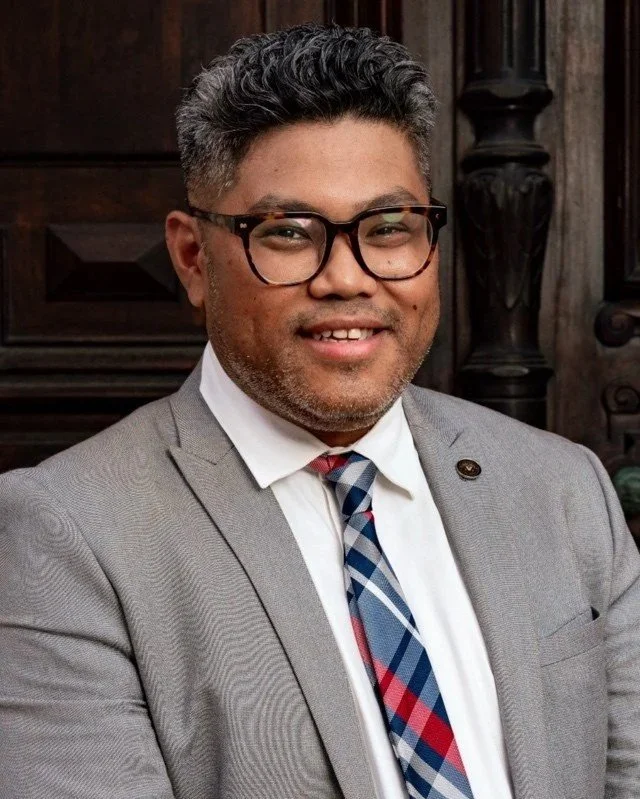
-
My parents—immigrants from the Philippines, where I was born—were a bit confused about my longstanding desire to be a teacher. “Why would you want to be a teacher?” they asked me. “We got to this country so that you can be poor? Really?”
But they supported me, and I’ve been an educator now for 23 years, starting out as an English teacher and moving up to various administrator positions until I landed where I am now as principal of a Bronx, New York, high school.
I've always wanted to be a teacher, and I attribute that to Camp Rising Sun, which I attended in 1995 at age 16. I saw the impact that it had on me and I wanted to provide a similar impact to the students that came into my classroom. It also was about the age group for Camp – the mid-teens – because to me it's such a great time to challenge them to think critically, build a sense of community and activate kids to want to do more, to care and to build empathy.
Those are things that I wanted to impart as an educator and that's still in my core as a district leader.
As for Camp itself, I remember “my brothers” and I being super active with a variety of projects initiated by us. Camp Rising Sun is built on a foundation for developing leadership, planning skills, and teamwork in leading, and we put that to use on tasks like chopping down dead trees, building a new archway and a tent platform. This was physical labor that was meaningful for me because we were paying it forward to Camp communities in the future.
Of course, we had a lot of fun along the way and built lifelong friendships. Those friendships led to bonds where heartfelt and truthful conversations could happen with kids from all around the world.
I remember watching a debate between two campers, an Israeli and Palestinian, and how it unfolded in a deep way that let me understand the complexity of the issue. Intense discussions also were happening between a Greek boy and Turkish boy when their countries were immersed in conflict in the 1990s. Those experiences started my thinking about issues in a very nuanced way and examining both sides of a conflict. And with the support of counselors, we learned to be brave enough to have those conversations on sensitive topics like race and diversity. After being exposed to that and participating in it in Camp, today with my students, I'm not afraid to meet that moment and have those conversations and, and help people have those conversations as well.
That level of discussion also led to empathy and intense friendships. I remember having to say goodbye to someone I had gotten very close to from Eastern Europe. I felt terrible knowing that he would be returning to violence in his homeland. It’s those moments – forever moments – that leave an imprint on you. To this day, I don’t know where he is, but I think about him all the time.
That experience led me to work, after college, with a nonprofit that assists refugees, particularly from war-torn countries. I wasn’t in the field in those countries, but I helped here in the States with all the relief programs needed, including acquiring visas and placement in safe areas.
My region was East Africa, so I worked with refugee camps in the Democratic Republic of Congo, Kenya, and Uganda. I also was spending more and more time volunteering to work with the New York refugees that were going through our organization and started teaching English to them and tutoring, which drove me even more toward becoming a teacher and making a career out of education.
Now that I’m in a leadership position, I realize that Camp equipped me for a life of public service where my decisions can have big impacts, and I take that seriously.
The foundation of ethical leadership at Camp is extremely important now because we need to think about where our moral compass is and we have to think about where we can right a wrong, or where we can enrich lives. It’s about utilizing your critical thinking, understanding and seeing both sides of an issue, and thinking about how your actions as a leader affects everyone else.
I feel extremely grateful for being accepted to Camp Rising Sun, not just for the reasons I’ve already outlined, but also for joining a community of people that continues long beyond Camp.
Even if my Camp brothers don't see each other on a regular basis, we still send messages to each other about weddings, get-togethers, or to somebody who's having a hard time. There’s still a core group of people that I can contact and vice versa. Some of my strongest friendships and relationships in my life are from meeting other alumni, including women that attended the girls' sessions, that went to Camp six years after me or even 20 years before me. There’s a brotherhood and sisterhood there that’s generational. And that’s what makes it special, because I can go to different places in the world and have a place to stay, even if I didn't go to Camp with them.
I think a lot about how Camp Rising Sun was different from most summer camps. Not to knock other camps, but from what I’ve heard they can be more recreation focused. We had our fun at Camp, but throughout the years I’ve always remembered what made it special – those intense conversations and genuine attempts to understand people that often are completely different from you culturally.
Understanding our common humanity is something that doesn't always happen in spaces like a regular summer camp, but it will happen at Camp Rising Sun.
Kate McCormick (CRs ‘99-‘00)
“I kept thinking about being grounded in the values of Camp. I’ve taken those values into everything I’ve done, because I’ve always sought to do meaningful work that contributes to the world in some way.”
Kate is an investigative journalist and producer at Frontline, the PBS documentary series. She has a master's degree from George Washington University, interned at the Investigative Reporting Workshop (IRW) at American University's School of Communication, and also worked with The Washington Post's investigative team, reporting for the Fatal Force series on police shootings.
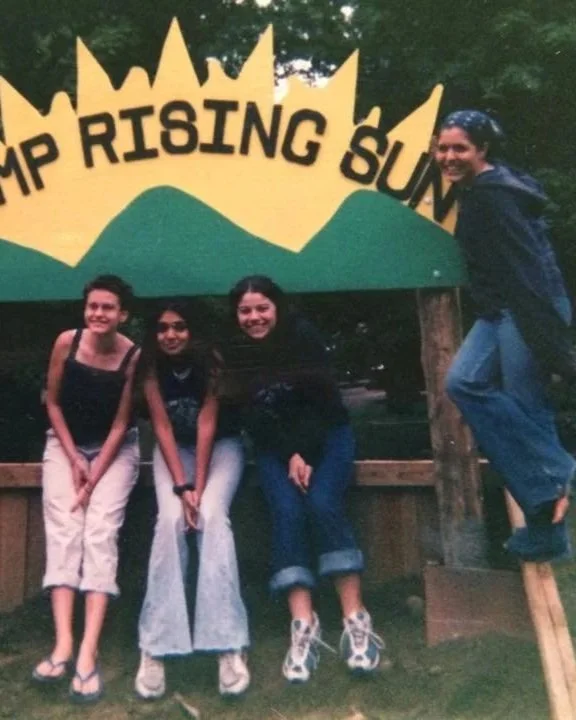
-
It was at Camp Rising Sun where I first got a sense of the meaning of trauma – not from Camp, of course, but from the experiences girls there shared with me about their homelands.
I recall enjoying the quiet times tucked away for a rest or for the night in my tent after the hustle and bustle of Camp activities. It was those times when I got to talk with other campers or reflect on our conversations.
The summers of 1999 and 2000, when I attended CRS at ages 14 and 15, were intense. We had girls from all over the world, but in particular, from counties in conflict with each other – for example Israel and Palestine and Northern Ireland, with one Catholic girl and one Protestant from the troubled nation.
I later realized that trying to decipher conflict and the resulting trauma from hearing the stories at Camp would lead me directly into my career as a documentary filmmaker. I discovered that creating a documentary is a way to process your subject, all the curiosity and questions that [interviewing them] carries, and what may come out of it that’s painful.
Of course, it wasn’t a straight path to that profession. I went to Stuyvesant High School in Manhattan and somehow stumbled upon a meeting where some people were discussing Camp Rising Sun. It’s funny that I can’t remember any more details about signing up, but I do recall arriving at the wooded campus one day by bus with worried parents at home wondering about what I was undertaking.
I got to know the girls quickly through shared projects, like a new sign we made for the camp and being immersed in activities run by the camp leaders, which always culminated in a massive dinner that they made for their peers. There were meetings where campers gave speeches on topics, and a lot of art, music and theater.
What stood out as unique to me was that the camp counselors and culture instilled a sense that everyone should have a say in these endeavors, and they gave us the confidence to look for more ways to expand on how we could contribute. What I remember the most was an overwhelming feeling of equality among us. Everyone got the same amount of respect.
The conversations with campers literally led me to college, since one of them told me about the Posse Foundation scholarships, which seek to cultivate a diverse mix of new leaders for our country. My family didn’t have a lot of money, so applying for and being awarded a scholarship through Posse to Vanderbilt was an amazing gift. It was there that I pretty much made up a major in filmmaking, because there wasn’t an advanced program at the time.
After leaving Vanderbilt, I did some filmmaking but also got diverted and made commercials for a bit, but that wasn’t the world I wanted to be in. I went to get a master’s in Journalism at George Washington University and that cemented my love for both documentary filmmaking and investigative journalism. I did some work at the Washington Post, which led to getting hired on the Frontline team, and that was the final coming together of my longtime interests of investigative work and documentary filmmaking.
Each step of the way, I kept thinking about Camp. Part of it was exploring the memories with girls I am still extremely close to today. I made some of my closest friends in Camp, and we talk and text every day and get together as much as possible. Aside from the friendships, I kept thinking about being grounded in the values of Camp. I’ve taken those values into everything I’ve done, because I’ve always sought to do meaningful work that contributes to the world in some way. I thought filmmaking might be enough, but the extra edge of investigative journalism was the added touch I wanted to make a difference.
Working toward progress in our world was probably something that appealed to me already, but it was drilled into me at Camp. So many of us Camp Rising Sun alumni have gravitated towards public service in some way, shape or form. There we found a community that shared a belief in our responsibility to do good in the world.
Those campers I met were not from the wealthiest countries. Some had witnessed people die in front of them; some were part of a world embroiled in deadly wars for decades. Camp was a place where they could openly work through the trauma they experienced. It wouldn’t solve the conflicts back home, but by learning to share with each other as vastly different human beings, I think provided a starting point for that goal.
How these girls dealt with that trauma was of great interest to me. I took that perspective to the work I do today. In some ways that made me feel like a voyeur, someone distanced from the actual pain while being curious about the world they endure. Then I remember that if I at least educate others about conflict, corruption and the other maladies of the world, maybe some solutions can be sought.
I just finished a piece with Frontline on the inadequacies of disaster relief in the U.S. We’re the richest nation on earth, and yet the way we respond to those in vulnerable situations is dismal in many cases.
I know that disasters bring trauma – whether they be life threatening or life altering in their devastation. I feel good knowing that I’m not just documenting these events, but that I’m exposing the challenges that need to be addressed.
As an investigative journalist, I’m always on the lookout for injustice and putting a lens on keeping people accountable for their actions. So, yes, Camp Rising Sun prepared me, grounded me in the principles of ethics in leadership and the mission to take my skills and use them across the globe for good. But as a 15 year old I was also lucky enough to find something simpler, kinder. The bonds I made with girls so many years ago are ones that live on today.
That closeness even expands to alumni campers I’ve never met. Last summer, I was in Maine with my family and I was wearing a CRS hat, and a man stopped me and asked, “Camp Rising Sun?” and I said, “Yes.” He introduced himself as a 1977 alumnus.
I'd never met this human being in my life, but we had an instant connection and we gave each other a huge hug, sat down and talked forever. We discussed where life had taken us, and how Camp may have impacted that. I’m hoping to see him again this summer. It's that kind of connection that can take you across years, across experiences; there’s something deep seated that you have in common with people who've been through the experience of Camp and who gravitated to it and took something away from it.
Santiago Mueckay (crs ‘06)
“The conversations I had at CRS with diverse campers provided an important foundation for the work I do today—communicating across cultural and political divides.”
Santiago works as Associate Director of Advocacy for Vera—a nonprofit advocacy group working to end overcriminalization and mass incarceration and to ensure a fair immigration system. In his role, he leads federal government relations and lobbying efforts for immigration policy. Before joining Vera in 2024, he served as Associate Director for Child and Family Migration Policy at Save the Children, where he worked to maintain migrant family unity and protect access to asylum. He holds a Bachelor of Arts in political science from the Macaulay Honors College at Baruch College and a Master of Public Policy from the Kennedy School of Government at Harvard University.
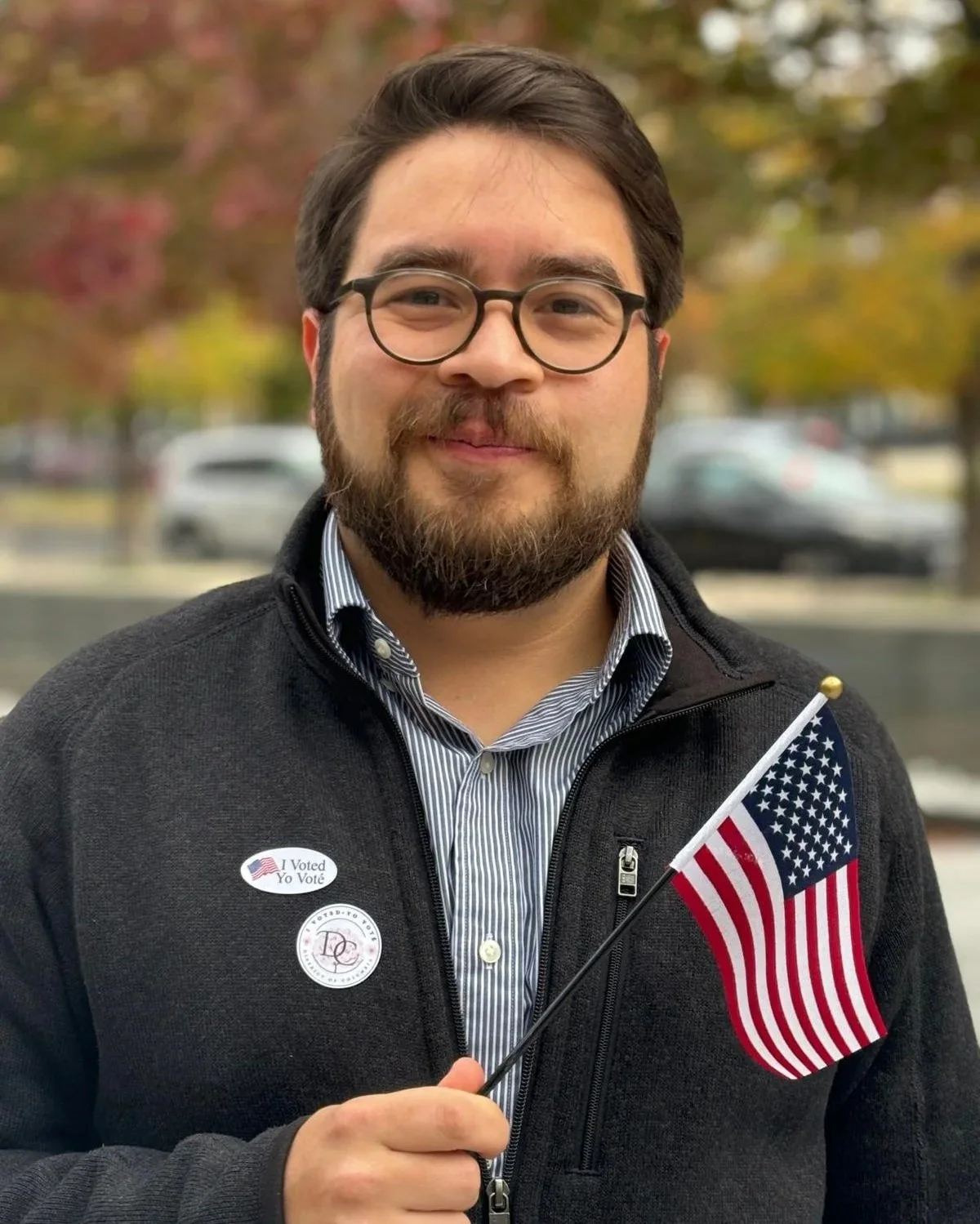
-
I was undocumented for much of my youth. I arrived in New York City from Ecuador at age nine, and my family tried to go through a legal process for residency, but unfortunately they hired a fraudulent lawyer who took thousands of dollars from us and botched our green-card applications.
Initially it seemed tragic for my family, but it didn't really affect me since I was in New York City, a progressive city with a diverse population that I slid into nicely. I was able to go to high school and live a normal life, and we finally achieved legal status for our family.
My undocumented status and working through the legal process eventually spurred me into my career. I had the privilege of attending Harvard Kennedy School to study human rights and migration. And while I was there, I did research for Save the Children—a nonprofit working worldwide to give children a healthy start in life, education, and protection from harm. When I graduated, I went to work for Save the Children. Being an immigrant, this felt like my calling. Now, in my work with Vera, I do a lot of work on immigration policy and providing legal representation for migrants, which ties back to my origin story and that fraudulent lawyer we hired instead of getting real legal aid. It's nice to come back full circle and be able to work in this space and help migrants get legal representation.
The other thing that impacted my path to advocacy was my experience at Camp Rising Sun, which I attended at age 14. It was such a transformative experience, and it really is something that has stuck with me for a very long time. Being able to spend those eight weeks together with kids from around the world and across the country was incredible.
Learning leadership skills was built into everything we did at Camp. I remember being the Leader of the Day, and that meant you planned all the activities and meals for campers. It was a great opportunity to exercise leadership in a way that isn’t usually available to most 14-year-olds.
On that day, there was so much I wanted to get done, and I think by the evening I may have only accomplished half what I intended. I had a day-end debrief with one of the counselors, talking through the challenges and reflecting on how the day went. This was even more rewarding than leading my activities. I think these conversations are such an important part of leadership, and it certainly ties to what CRS now calls “ethical leadership.” You want to lead, but you want to be conscious about the impact that your decisions are having on others and yourself. You don’t find that kind of follow-up discussion in most settings, but it’s a foundation of Camp Rising Sun and it really lets you look deep into planning for your next leadership opportunity.
The projects we tackled also led to great feelings of accomplishment. I remember the task of finishing this massive hogan, a Navajo dwelling structure—part earthen materials and part giant logs that we were cutting and putting on top of each other. When it was finished, I thought, “We are only 14. How did we get that done?”
I also loved the cooking each day at Camp and the art of cooking. I was accustomed to diverse food and culture in New York City, but this was first-hand participation in making and sharing meals with teens from around the world. It was cool to see how each camper would bring their recipes and try them out on their peers, which also let you learn even more about their culture. Then there are the little things you learn. I remember a Japanese camper taught us how to fold a T-shirt super quickly. I laugh a bit about it now, but it’s something that I still use to this day.
The dialogue I had with kids from other countries really taught me how to consider what I was saying, and what I intended to achieve with conversations. The Japanese camper didn't speak English that well, and it was a bit difficult to communicate, until we realized that we both liked Pokémon. That commonality was just what we needed to converse, and it grew from there.
Those conversations with diverse campers provided an important foundation for the work I do today—communicating across cultural and political divides. When I go into a congressional office, I think about how I’m going to approach the staff in a way where we can form a connection first, then get into details.
Camp certainly shaped the ways that I think about communicating, sharing ideas, and sharing values. I think these skills are super important, but unfortunately they could be dying out. These days we're talking past each other or seeing who can scream the loudest. You do need to raise your voice when you see injustice in the world, but there are also opportunities to speak with people and meet them where they are—a skill that I certainly took away from Camp.
Sometimes the word “brotherhood” gets thrown around a lot. But I think that there was that special connection between campers at such an influential moment in our lives. When you’re 14, you wonder about your life taking a million different directions, and Camp can help show you what’s out there with the different cultures, the different points of view around you.
Another powerful experience will continue with me forever, because it was a nod to the years ahead. We had the opportunity to write a letter to ourselves in the future. We chopped wood for a day or two, took it with us to a campfire, and then we’d stay up through the night feeding the fire and writing a letter to ourselves. I ended up writing 30 pages that night. I received my letter when I turned 21, and I still have it. It was an incredible moment to receive a letter from the “14-year-old you”—to see how much you've grown and developed and how your values have adapted with your lived experience.
Today, when I think about the daily grind and all the different things I do to help immigrants, I keep a little piece of Camp Rising Sun in my pocket. Although I work with a team, I also need to lead at points in our collaboration, and I want to explore how my decisions can make the most impact for the good of all of us. In a frenzied political environment, we need more Camp Rising Sun alums to emerge into the world for steady hands, empathy, and informed decision-making.
When I arrived at Camp, I had never hiked; After all, I was from New York City. But several of us went off, and we did something crazy, going over five mountains in two days. Now, I love hiking and have done sections of the Appalachian Trail, Glacier National Park, and other challenging treks. Whether on the trail or at the Capitol, I’m grateful to have Camp Rising Sun with me every step of the way.
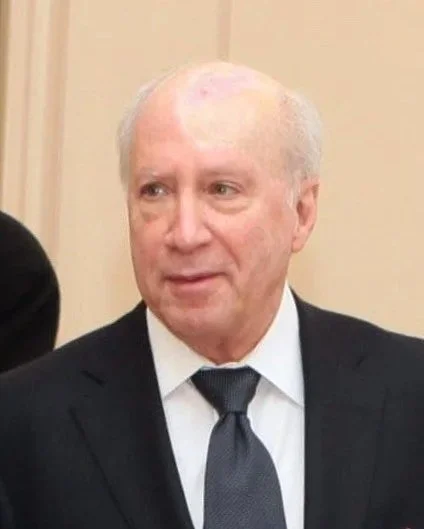
Matthew Nimetz (CRS ‘55)
“There were about 50 boys at CRS during my summer, and at least 15 were from other countries. All bright and interested in the world. It had a profound influence on me and propelled me to spend much of the rest of my life working in foreign countries.”
Matthew was born in New York City and educated at Williams College, Oxford, and Harvard, where he got his law degree. He served as clerk to Supreme Court Justice John Marshall Harlan II from 1965 to 1967, before serving as a staff assistant to President Lyndon B. Johnson until 1969. In 1977, President Jimmy Carter named him Counselor of the United States Department of State, tasked with providing advice to Secretary of State Cyrus Vance on Turkey-Greece issues. From March 1994 to September 1995, he served as President Bill Clinton's Special Envoy, helping dissolve tension in the Balkans over the Macedonia naming dispute. Throughout his career, he worked at various law firms and as the head of a global equity firm. He has also has been a director of The Nature Conservancy of New York, and founded or chaired numerous international policy organizations.
-
When you think about the things that influence your life, there are four years spent in college, then possibly a couple of years of graduate school, and for me, three years of law school. So, it’s interesting to think that a summer camp had no less of an impact, and it was just a few weeks when I was 15.
When I was at high school in Brooklyn in 1955, I got an invitation to Camp Rising Sun in upstate New York. I didn’t know anything about the camp, but my family ended up hosting a young man from Turkey who spent some time with us before Camp started. He didn’t speak English well at the time, but we’d sit and read language phrase books to get acquainted.
Little did I know that I would go on to become an international diplomat, spending considerable time in Turkey and Greece – at a tough time in the late 1970s when tensions were high between the two countries after Turkey invaded Cyprus in 1974.
Of course, when the Turkish boy and I headed out to Camp on a bus one day, I didn’t know what path my life was going to take. I was interested in international studies, and I knew I wanted to travel. But in those days no one traveled, at least not regularly. This was 1955 and flying was expensive. I remember as a youth seeing some of my uncles ship off on the Queen Mary to travel abroad and it was a spectacular sight.
There were about 50 boys at Camp Rising Sun when we arrived, and I think at least 15 were from other countries. I had a lot of good high school friends, but this was a new set of friends – all bright and interested in the world. It had a profound influence on me and propelled me to spend much of the rest of my life working in foreign countries.
I ended up having three careers – lawyer, diplomat, and businessman – although they were all built on a foundation of law. I graduated top of my class from Harvard Law School and was president of the Harvard Law Review, then I was awarded a Rhodes Scholarship to study at Oxford University for two years before I clerked for U.S. Supreme Court Justice John Marshall Harlan II from 1965 to 1967. I spent time in private practice, then ended up working for President Johnson on a variety of social and policy issues. In 1977, President Jimmy Carter appointed me as Counselor of the United States Department of State, and I advised the secretary of state, Cyrus Vance, on the Greece-Turkey disputes.
Through all of this, I remembered something that George “Freddy” Jonas – the creator and driving force of Camp Rising Sun – instilled in me: giving, and that even little good works mattered. It wasn’t something that he and the camp staff drove into your head every day; it was more subtle and developed in our work and social life as campers and with the interactions with Freddy and the counselors.
I bonded with the other campers over daily routines like cooking, kitchen work, and chores, but also through artistic pursuits like a production of The Pirates of Penzance. (I wasn’t good on the stage, so I helped with the sets!) We’d work together in the garden and build things for the camp, and it really galvanized us with a common purpose.
It wasn’t necessarily that we felt elite for being at Camp Rising Sun, but we all began to feel a sense that we were going to do something that mattered in the world. And we would be armed with what Freddy called the “spirit of giving” – that you have an obligation in life to do things for others and to act and lead with ethics that consider the welfare of others. He would tell us little stories from his life with those themes, and he also exuded a positive spirit and was fond of the old saying that “it’s better to light a candle than curse the darkness.”
I have been very fortunate to travel the world through my various professions, and in many places I went, the bright lights of former campers were there to greet me. I kept in touch with the Turkish boy over the years and visited him in Istanbul, and I also developed a close relationship with a Greek camper who went on to become an orthopedic surgeon and who I had dinner with last summer. Of course, we’ve all changed with what we’ve encountered in life, but it’s still very easy to slip back to our bonds and have wonderful conversations about the world, like we did in Camp.
I’ve saved for last what I’m most known for: working for some 25 years on what seemed to be a small problem but was very meaningful to the people involved. A newly independent Macedonia formed with the collapse of Yugoslavia in 1991 and became involved in a dispute with Greece over its name, as the name also defined a region and people in Greece, which was not willing to relinquish it. What’s in a name? A lot when thousands of years of history and culture have informed it. Protests in Greece over the conflict led to the downfall of two Greek prime ministers and there were fears of warfare.
I worked with the former secretary of state, Cyrus Vance, and the United Nations to mediate the situation. I wasn’t randomly assigned, since I had expertise in diplomacy and that region, but I didn’t realize it would become a defining period of my life that spanned years. Eventually, in 2019, the two countries ratified the Prespa Agreement that established the name North Macedonia (officially the Republic of North Macedonia). Today, I still encounter people who ask me (hopefully jokingly), “What took you so long?” Some people think it was just me sitting there thinking of adjectives to put in front of the name Macedonia – like New Macedonia, Upper Macedonia – but we had to respect the depth of the conflict and come to terms with how names shape the identities of people, and that’s not an easy process.
What’s really interesting about that lengthy investment in diplomacy is that it harkened back to my days at Camp Rising Sun and the friendships I had with the Greek and Turkish campers. Just like in Camp, I needed to show leadership on the issue to get something done, but I also had to collaborate and think through every suggestion for a possible solution that would work well for everyone involved. I maintained the care for the consideration of others in every step I took – in what seemed to many to be trivial – even if it took more than two decades. And for that, I am grateful to Freddy and Camp for equipping me for that role.